Pocket Galaxy - Sandbox Game
Pocket Labs LtdSimulation
4.74.66K Reviews
- Version
- 1.81
- Installs
- 50.00K
- Age Rating
- Everyone
Screenshots
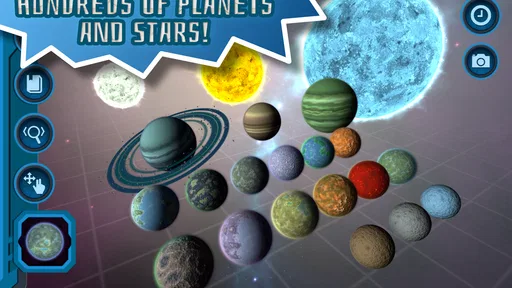
Our Review of Pocket Galaxy - Sandbox Game
 Analysis by Appyee
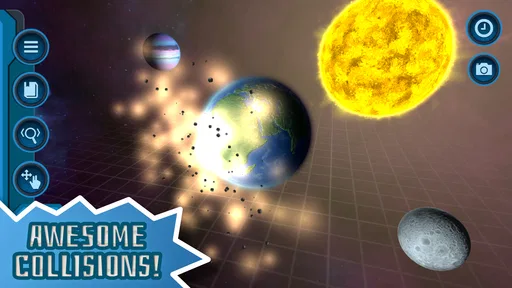
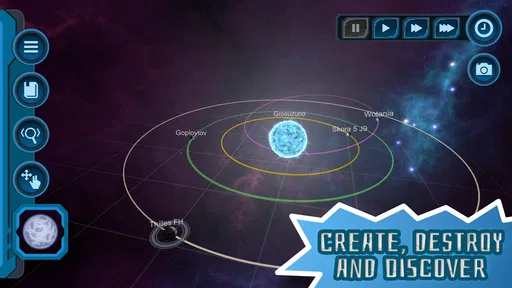
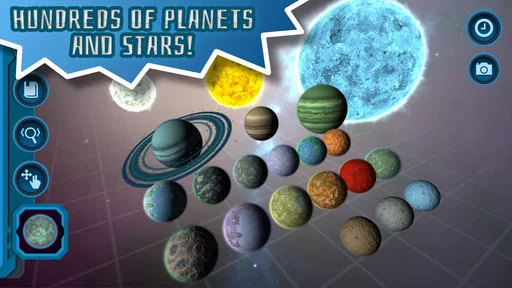
My first useful question with a sandbox game is what it asks me to do when I open it, and whether I can find my own direction after that. Pocket Galaxy - Sandbox Game is a simulation game from Pocket Labs Ltd built around playing with planetary systems: setting bodies in motion, watching their orbits, and seeing what happens when a system is disrupted. That makes its appeal less about following a conventional story and more about curiosity. I would approach it as a small cosmic playground, not as a space adventure with a plotted campaign.
What gives a new session direction
The early goal is largely self-chosen: begin with a system, observe how its pieces behave, then try a change and see what follows. That freedom is inviting if you like learning by doing, but it can also leave a newcomer wondering what counts as progress. I found it helpful to make one simple experiment at a time rather than changing several things at once. If a planet’s path shifts or the system falls apart, you can tell more clearly which action caused it.
This approach also makes the game easy to pick up for a short break. I can imagine opening it while waiting for a train, choosing one small idea—such as seeing how a planet’s orbit changes when the surrounding arrangement is altered—and then leaving once I have an outcome to think about. It is not the sort of game that needs a long uninterrupted session to make sense, though someone who wants a clear mission marker or a steady sequence of objectives may find the open-ended start too loose.
How progress feels without a conventional campaign
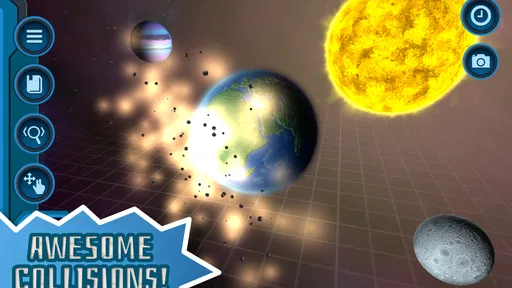
In a goal-driven simulation, progress is often announced through levels, rewards, or a checklist. Here, the more meaningful signal is what I understand and can reproduce: a stable arrangement, a surprising collision, or a chain reaction I managed to set up deliberately. That makes progress personal rather than uniform. One player may be satisfied by carefully maintaining an orbit; another may be more interested in watching a system break apart.
For a more satisfying experiment, I would keep a mental note of the starting arrangement and change only one variable per attempt. That is a practical way to turn free play into a small challenge without needing a formal task list. It also helps when an outcome looks dramatic but is difficult to explain: repeating the setup with one adjustment can show whether the result came from that choice or from the broader arrangement.
Challenge, pacing, and the limits of open play
The difficulty here comes less from a rising set of stages and more from understanding cause and effect. If you enjoy testing ideas, the low-pressure pace can be a strength; failure becomes something to inspect rather than a penalty that ends a run. If you prefer a game that steadily introduces harder goals and tells you exactly when you have mastered each one, this style may feel under-directed. I would not mistake an open sandbox for a structured physics course, either: it is most rewarding as interactive play, not as a substitute for a guided lesson.
That difference matters when comparing it with the usual alternatives. A puzzle game gives you a defined problem and a pass-or-fail answer, while a management simulation typically asks you to maintain resources and meet ongoing targets. This game’s distinctive draw is the freedom to manipulate a planetary setup and watch the consequences, rather than manage a long list of needs. If you want carefully staged puzzles or a detailed civilization to run, I would choose a game designed around those systems instead.
Who is likely to enjoy it
I would recommend it most to people who like space imagery, cause-and-effect experiments, and games they can enjoy without committing to a lengthy session. It can suit a curious player who wants to make a change, watch the result, and then try something more extreme. It is also a reasonable choice for someone who enjoys inventing their own little objectives rather than being directed by a campaign.
I would be more cautious if you need explicit progression, a deep tutorial, or a reliable sequence of increasingly difficult challenges to stay engaged. The game’s open format asks you to supply some of your own motivation. A practical way to decide is to try a few small experiments and see whether the results make you want to ask another question. If you mainly want an objective that tells you what to do next, that same freedom may feel like a lack of direction.
Everyday use and a useful way to experiment
For me, the most realistic use case is a short pause in the day when I want something more absorbing than scrolling, but not a game that demands a full evening. I would start with a modest experiment, watch the system for a little while, and stop when I have learned something or created a result worth remembering. To get more from that kind of session, avoid making multiple changes at once; a single deliberate adjustment makes the outcome easier to interpret and gives you a natural next attempt.
There is a trade-off in that method. Self-imposed goals make the sandbox feel more purposeful, but they are not the same as built-in milestones. If you want a lasting sense of advancement that is clearly recorded for you, a campaign-based simulation may be a better fit. If your reward is the experiment itself, however, keeping the challenge small and repeatable can make an otherwise open session feel satisfying rather than aimless.
The Ultimate Sandbox Experience
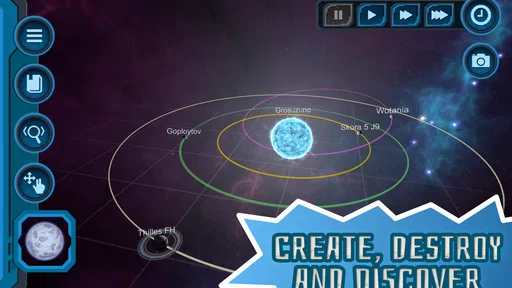
So, what’s the deal with Pocket Galaxy - Sandbox Game? Well, imagine being able to create, explore, and manipulate your own universe right from your smartphone. The game offers a sprawling sandbox environment where you can unleash your creativity. Whether you're into building massive space stations, terraforming planets, or just cruising around the galaxy, this app has got you covered.
The interface is surprisingly intuitive. With a few taps and swipes, you can zoom through the stars or dive deep into a planet’s surface. The controls are smooth, making it easy for even the most casual gamers to get hooked. Plus, the graphics are pretty slick for a mobile game, with vibrant colors and intricate details that make your cosmic creations pop.
Features That Are Out of This World
One of the coolest aspects of this game is its endless possibilities. You’re not just playing in someone else’s universe; you’re crafting your own. Here’s a rundown of some standout features:
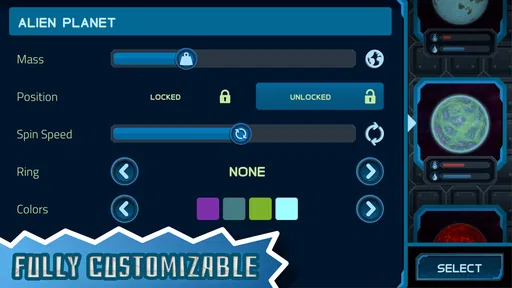
- Customizable Planets: You can mold planets to your liking—change landscapes, add life, or even destroy them if you’re feeling a bit like a space tyrant.
- Space Exploration: Hop from one planet to another, explore asteroid fields, and uncover hidden treasures scattered across the universe.
- Multiplayer Mode: Team up with friends or other players online to build together or compete in epic space battles.
- Realistic Physics: The game’s physics engine makes everything from gravity to weather systems feel authentic, enhancing the immersive experience.
Why You'll Keep Coming Back
One of the things I love most about Pocket Galaxy is its replayability. No two sessions are ever the same. One moment you’re peacefully building a utopia on a distant star, and the next, you’re fending off an asteroid shower or battling space pirates. It’s this unpredictability that keeps you glued to your screen.
The game also encourages creativity and experimentation. If you’ve ever wanted to see what would happen if you plunked a volcano in the middle of an icy world, go for it! The sky's the limit, and the game rewards you for thinking outside the box.
Room for Improvement
While I’m a big fan of Pocket Galaxy - Sandbox Game, it’s not without its quirks. Occasionally, the game can be a bit laggy, especially when there’s a lot happening on screen. This can be a little frustrating, but it’s not a deal-breaker. Also, while the free version offers plenty to do, there are in-app purchases that can enhance the experience, which might not be everyone’s cup of tea.
Another minor gripe is that some of the tutorials could be a bit more detailed. For true beginners, diving into the game can feel a bit overwhelming without a comprehensive guide, but hey, fumbling around can be part of the fun, right?
Final Thoughts
All in all, Pocket Galaxy - Sandbox Game is a stellar app for anyone with a passion for space and creativity. It’s a game that can be as calming or as exhilarating as you want it to be. Whether you’re in it for the long haul or just looking for a quick cosmic escape during your commute, it’s definitely worth checking out.
The current version is 1.81, and it runs on Android 4.4 or later. It is rated for Everyone, which makes the subject matter broadly approachable, though I would still expect younger players to benefit from an adult nearby when experimenting with unfamiliar controls. The game costs $2.49. That upfront price is worth weighing against your habits: it makes more sense if you expect to return to a hands-on space sandbox than if you only want a quick novelty to try once.
Its average rating is 4.7 from around 19,000 ratings, with roughly 4,700 written reviews and over 50,000 installs. Those figures suggest that it has found an audience, but they do not tell me whether its open-ended style suits you. I would use the rating as a reason to take a closer look, not as a substitute for deciding whether you enjoy experimenting without a prescribed objective.
Making the progression last
To keep the experience fresh, I would set a different kind of personal target from session to session: one day focus on keeping a system orderly, another day deliberately test how it responds to disruption. The point is not to invent a complicated scoring system for yourself; it is to give each visit a question. That small habit helps prevent free play from collapsing into repeated tapping without a reason to notice what changed.
There is also a useful distinction between visual spectacle and understanding. A dramatic event may be entertaining, but a quieter test can teach you more about how the setup behaves. When I want a session to feel worthwhile, I would first make a stable arrangement, then introduce one change and watch the result before trying anything else. It is a simple workflow, but it gives the game’s central idea room to breathe and makes a surprising outcome feel earned rather than random.
For players who ask whether it is suitable for very brief visits, the answer is yes if they are happy to create their own stopping point. One experiment can make a complete little session. For someone who wants the game to save a long chain of objectives or provide a strong narrative reason to return, the more relevant question is whether the act of experimenting is enough motivation on its own. That is the dividing line I would consider before paying.
Where the game fits among space games
Compared with a conventional space builder, this is better approached as a compact simulation toy than as a project-management game. The appeal is immediate interaction with a system, rather than planning a large settlement around an expanding set of demands. Compared with a physics puzzle, it gives you more room to play but less certainty about what constitutes a correct solution. Neither style is inherently better; they serve different moods, and this one is strongest when you want to explore consequences at your own pace.
The same distinction helps answer whether it is a good choice for a child or a casual player. Its Everyone age rating and accessible premise make it easy to consider, while its loose direction means a child who thrives on clear instructions may need help turning curiosity into a small challenge. A casual adult who simply wants a few minutes of visual, interactive experimentation may need no such structure. The audience fit depends less on space knowledge than on comfort with making your own goals.
A measured verdict on staying power
Pocket Labs Ltd has made a simulation whose retention comes from repeatable curiosity rather than an obvious ladder of stages. That is a real strength for players who like to test, observe, and try again, and a real limitation for anyone who measures progress through unlocks, missions, or a steadily increasing difficulty curve. I would not buy it expecting a campaign to pull me forward; I would buy it because I enjoy the small satisfaction of causing a change and watching a planetary system respond.
My recommendation is therefore fairly specific. Choose it if you want a portable space sandbox, are comfortable setting your own experiments, and find the process more rewarding than a checklist. Skip it in favor of a more structured simulation or puzzle game if you need explicit goals, guided lessons, or a strong progression track. As a paid, open-ended diversion, it has a clear personality; whether that personality lasts depends on how much you enjoy asking the next question yourself.
So, are you ready to become the master of your own universe? Grab your phone, hit download, and let your imagination soar to infinity and beyond!
Verdict
Strengths of Pocket Galaxy - Sandbox Game
- Immersive space exploration experience.
- Highly customizable ships and equipment.
- Engaging missions and challenges.
- Smooth graphics and intuitive controls.
- Frequent updates with new features.
Limitations of Pocket Galaxy - Sandbox Game
- Occasional in-game lag issues.
- Can be complex for beginners.
- In-app purchases can be pricey.
- Limited offline play options.
- Requires significant device storage.
Similar Picks in This Category
View All
Truckers of Europe 3
Wanda Software4.3

Town Building Life Simulator
XGame Global4.2

Fidget Toys Trading・Pop It 3D
Freeplay Inc4.7

Sculpt People
CrazyLabs LTD4.4

Scary Teacher 3D
Z & K Games4.2

Hair Tattoo: Barber Shop Game
CASUAL AZUR GAMES4.3
Frequently Asked Questions
What is Pocket Galaxy - Sandbox Game all about?
Pocket Galaxy is a sandbox game that allows players to explore a vast universe filled with planets, stars, and other celestial bodies. Players can build and customize their own spaceships, engage in interstellar trade, and participate in epic space battles. The game emphasizes creativity and exploration, offering endless possibilities for discovery and adventure.
Is Pocket Galaxy free to play, or are there in-app purchases?
Pocket Galaxy is free to download and play, but it includes in-app purchases. These purchases can enhance the gaming experience by providing access to premium items, faster progress, or cosmetic upgrades. Players can enjoy the game without spending money, but purchases may be tempting for those looking to advance quicker.
What are the system requirements for Pocket Galaxy on Android and iOS?
To run Pocket Galaxy smoothly, Android users should have a device running Android 5.0 or later, with at least 2GB of RAM. iOS users need a device with iOS 11.0 or later. It's recommended to have sufficient storage space available and a stable internet connection to fully experience online features.
Does Pocket Galaxy support multiplayer or co-op play?
Yes, Pocket Galaxy offers multiplayer features, allowing players to team up with friends or join alliances. Through cooperative gameplay, users can collaborate on missions, trade resources, and engage in battles together. This adds a social element to the game, enhancing the overall experience and providing more strategic gameplay opportunities.
How often is Pocket Galaxy updated with new content?
The developers of Pocket Galaxy regularly update the game with new content, including planets, missions, and features. Updates often address bug fixes and improve gameplay mechanics. Players can expect fresh content and enhancements to keep the game exciting and engaging. It's advisable to check for updates frequently to enjoy the latest additions.
Play our best games!


